Washington, D.C.
The Dark HalfWashington, D.C. is a major urban setting where the novel’s invented crime-fiction identity collides with actual violence. It is the site of Frederick Clawson’s murder, part of the city’s political and literary landscape through Dodie Eberhart, and a destination in the elaborate double-life scenario Thad proposes to explain the killings.
Setting and Social Landscape
Dodie Eberhart’s history gives the city a distinctly political dimension. Once a sought-after call girl, she moved among prominent figures during the second Johnson and first Nixon administrations. Two regular clients—a Democratic senator and a senior Republican representative—provided enough money for her to leave the business, though she secured it rather than trusting promises that they would remember her in their wills. Her Washington past thus links private transactions to the city’s public political sphere.
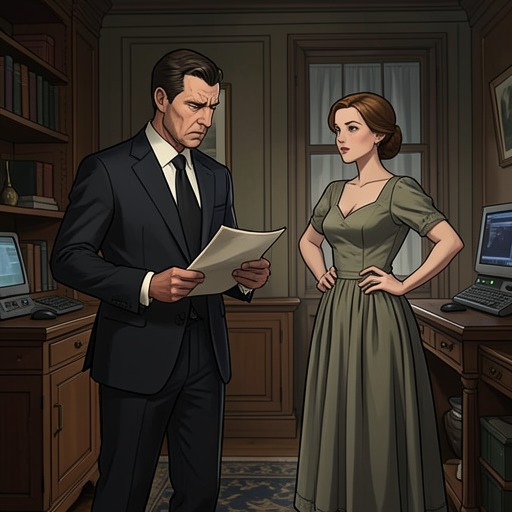
By the time the story reaches her apartment building on L Street, Dodie is a landlord with a keen interest in crime novels. She climbs to a third-floor apartment to confront Frederick Clawson over repeatedly late rent. His assurances that money is coming have partly persuaded her to wait, and his George Stark books and notes catch her attention. Her home and business encounter turn the city’s ordinary residential setting into the threshold of a crime scene.
Dodie Eberhart and the Crime-Fiction World
Dodie’s reading habits are specific and consequential: she favors crime novels, particularly the hard-edged work of Elmore Leonard, Jim Thompson, David Goodis, Horace McCoy, and Charles Willeford. She regards George Stark as the best of the writers she follows, from Machine’s Way and Oxford Blues through Riding to Babylon. That familiarity makes Clawson’s collection legible to her as more than decoration; it signals an attachment to a fictional world that will soon meet real violence.
The novel’s account of Stark’s literary identity sharpens this connection. Thad Beaumont explains that he chose the name by way of Donald E. Westlake’s pseudonym Richard Stark, whose Parker novels follow a professional thief with a narrow, relentless purpose. Beaumont compares Parker’s mechanical pursuit of money to Alexis Machine, the central character of the first and last George Stark novels. In Washington, Dodie’s admiration for Stark and Clawson’s collection make the invented author part of the city’s material world, not simply a name on a book cover.
Clawson’s Murder and Its Reach
The city becomes a murder setting when Alan Pangborn tells Thad and Liz Beaumont that Frederick Clawson has been killed in Washington, D.C. Liz’s startled reaction shows that the name is familiar to her, while Pangborn says he cannot understand how anyone other than Thad could have committed the two murders. He has come to ask for help, not to arrest or harass Thad, because the apparent evidence and the known alibis do not fit together.
Dodie’s visit to Clawson’s apartment brings the same event into a second narrative frame: an ordinary rent dispute becomes a discovery that something is seriously wrong. Peeking into the living room, she takes in the arrangement of beer bottles, an ashtray, scattered pushpins, and an open copy of People featuring the Thad Beaumont/George Stark story. The magazine shows the Beaumonts shaking hands across Stark’s gravestone. In one room, the public exposure of a pen name, the fictional author’s supposed burial, and Clawson’s real-world connection to Stark’s books meet as clues in a developing mystery.
A Route Through the City, and Beyond
When Thad imagines the explanation Pangborn may have considered, he lays out a route that places Washington at the far end of an elaborate deception. A hypothetical twin could remain at the gathering in Castle Rock while Thad drove Homer Gamache’s truck to a Connecticut rest stop, stole another car, continued to New York, abandoned the stolen vehicle, and took a train or plane to Washington. In this scenario, he would kill Clawson, hurry back to Ludlow, and resume his life alongside the twin. Thad even adds the possibility that Liz was part of the deception, turning the theory into an intentionally extravagant account of how the evidence might be reconciled.
Washington therefore occupies more than a place on the map. Its murder investigation stretches the apparent reach of the violence beyond Maine, while Thad’s imagined itinerary makes distance and travel part of the problem of identity: who could have been where, and whether one person might appear to live two lives. The city’s association with Clawson and Dodie also binds the novel’s crime-fiction readership to its central collision between a created criminal persona and consequences unfolding in the real world.